16 Feb 2024|Mekong Delta, Onboard Experience, Wildlife
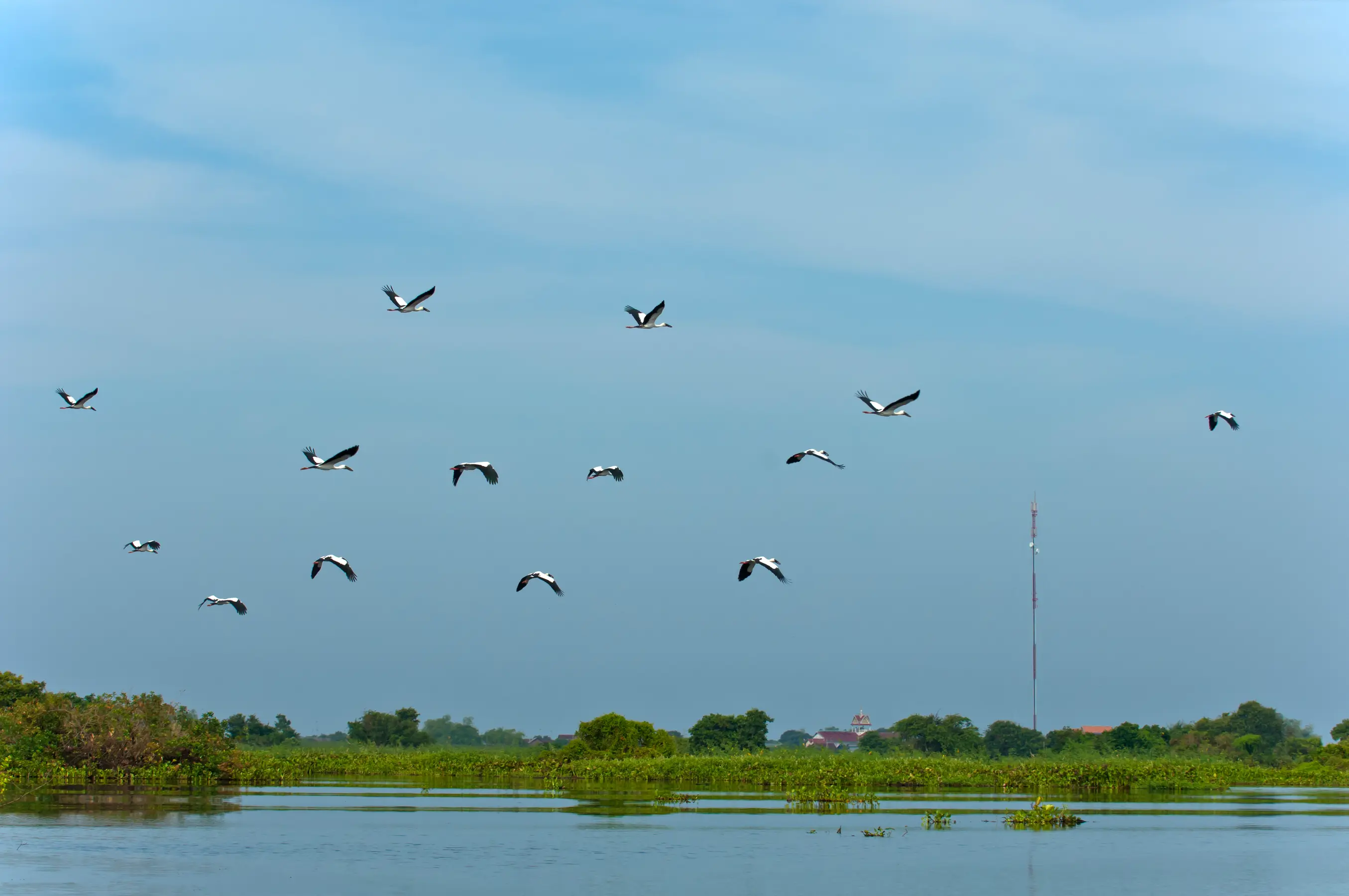
While the Aqua Mekong itineraries explore the culture, heritage, and rural life of the river communities of Vietnam and Cambodia, an undisputed highlight would be the early morning excursion into the Prek Toal Bird Sanctuary Biosphere Reserve.
Located to the Northwest of one of the largest freshwater bodies in Asia — the Tonle Sap Lake —the bird sanctuary comprises one of the three key protected areas of the Tonle Sap Biosphere Reserve. It is regarded as the single most important breeding ground for some of the world’s most endangered large waterbirds species such as the Black-Headed Ibis, Painted Stork, Greater and Lesser Adjutants, Spot-billed Pelican, Milky Stork, White-winged Duck, and the Grey-Headed Fish Eagle.
Whether you are a birding enthusiast or not, a visit is bound to be a rewarding experience, not least because of the peaceful surroundings. Our Prek Toal excursion is a highly exclusive encounter, available during mid-August to November, when the waters of the Mekong River reverses into the Tonle Sap Lake in a naturally occurring phenomenon called the ‘flood-pulse’ system. The flow from the connecting tributary during the wet monsoon floods huge volumes back to the lake, increasing its area about six-fold and brings with it fish migration and a highly productive ecosystem.
Milky Stork (Mycteria cinerea)
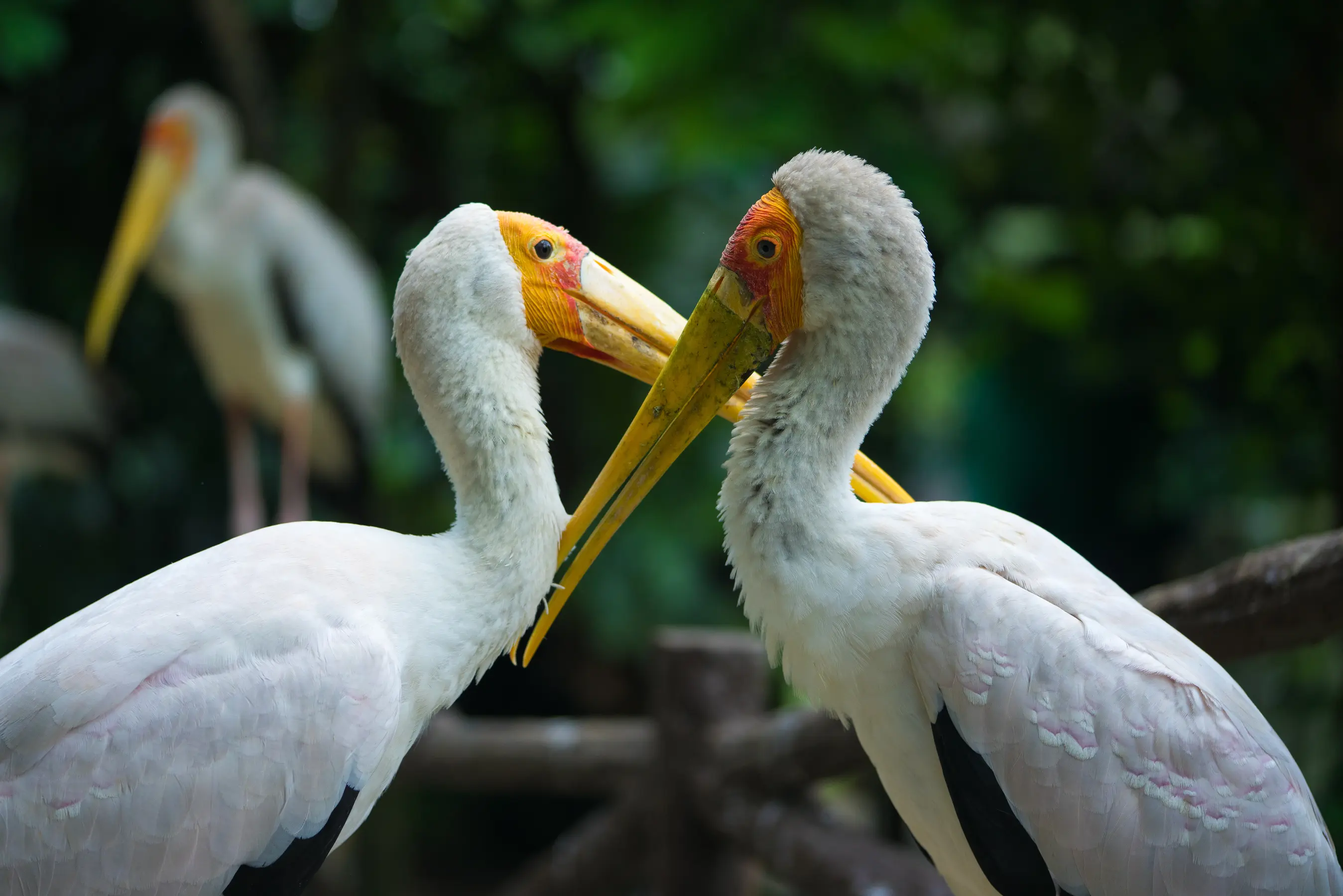
Known as the Milky Stork for its extensive white plumage that is completely suffused with a pale creamy yellow color during the breeding season, it is a medium-sized species found predominantly in coastal mangroves in parts of Southeast Asia, making Cambodia, Peninsular Malaysia, and the Indonesian islands of Sumatra, Java, Bali, Sumbawa, Sulawesi, and Buton home.
They are listed on the IUCN Red List of Threatened Species as Endangered because their recent population estimates on 1,500 mature individuals from its stronghold in Sumatra suggest that it is undergoing a very rapid ongoing decline owing to intense hunting pressure at nesting colonies, human disturbance, and the swift loss and conversion of coastal habitat.
While the tiny Cambodian population may be relatively stable, an estimated global decline of the population at 50 to 79 percent is estimated within three generations or 25 years. Prek Toal is perhaps the only site in the world where the Milky Stork breeds in freshwater, so keep your eyes peeled!
Milky Stork (Mycteria cinerea)
Known as the Milky Stork for its extensive white plumage that is completely suffused with a pale creamy yellow color during the breeding season, it is a medium-sized species found predominantly in coastal mangroves in parts of Southeast Asia, making Cambodia, Peninsular Malaysia, and the Indonesian islands of Sumatra, Java, Bali, Sumbawa, Sulawesi, and Buton home.
They are listed on the IUCN Red List of Threatened Species as Endangered because their recent population estimates on 1,500 mature individuals from its stronghold in Sumatra suggest that it is undergoing a very rapid ongoing decline owing to intense hunting pressure at nesting colonies, human disturbance, and the swift loss and conversion of coastal habitat.
While the tiny Cambodian population may be relatively stable, an estimated global decline of the population at 50 to 79 percent is estimated within three generations or 25 years. Prek Toal is perhaps the only site in the world where the Milky Stork breeds in freshwater, so keep your eyes peeled!
Spot-Billed Pelicans (Pelecanus philippensis)
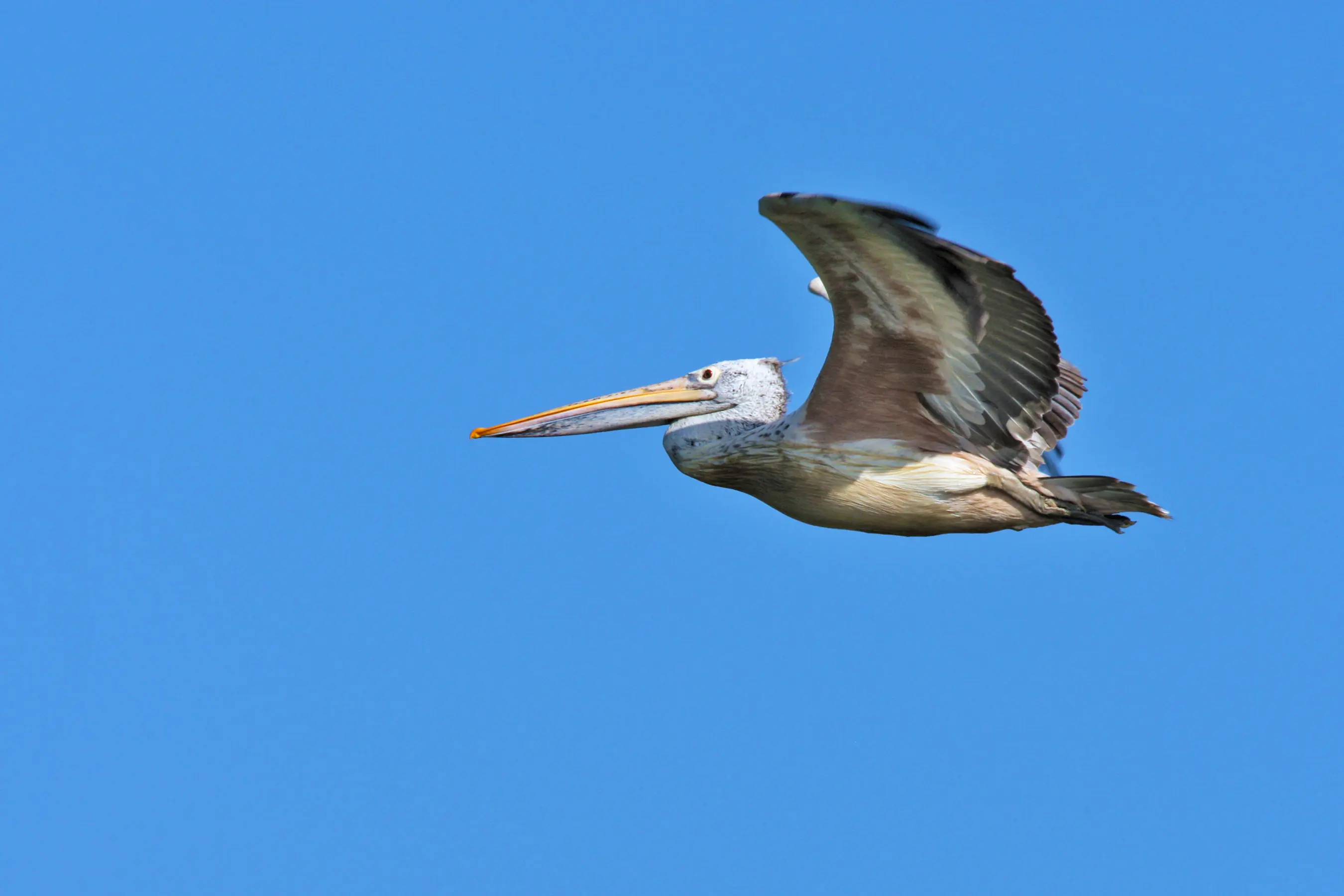
They may look like other pelicans from the region, but it is only at close range that you will be able to identify them as spot-billed pelicans due to their distinctive spot markings on the upper mandible — which develop in adulthood, lack of bright colors, and their greyer plumage.
These birds can only be found in Southeast Asia, mostly near open water such as lowland freshwater, brackish, and marine wetlands, over a range of territory between 129,000 and 181,000 square kilometers. The largest remaining populations are in India, Sri Lanka, southern Cambodia, and Sumatra along coastal areas.
They are a social species, which live and travel mainly in flocks. There is an estimated and declining, population of only 8,700 to 12,000 mature individuals left in the world, making their status on the International Union for Conservation of Nature’s (IUCN) Red List of Threatened Species as Near Threatened, due to habitat loss from deforestation, hunting, pollution, and overfishing.
Spot-Billed Pelicans (Pelecanus philippensis)
They may look like other pelicans from the region, but it is only at close range that you will be able to identify them as spot-billed pelicans due to their distinctive spot markings on the upper mandible — which develop in adulthood, lack of bright colors, and their greyer plumage.
These birds can only be found in Southeast Asia, mostly near open water such as lowland freshwater, brackish, and marine wetlands, over a range of territory between 129,000 and 181,000 square kilometers. The largest remaining populations are in India, Sri Lanka, southern Cambodia, and Sumatra along coastal areas.
They are a social species, which live and travel mainly in flocks. There is an estimated and declining, population of only 8,700 to 12,000 mature individuals left in the world, making their status on the International Union for Conservation of Nature’s (IUCN) Red List of Threatened Species as Near Threatened, due to habitat loss from deforestation, hunting, pollution, and overfishing.
Black-headed Ibis (Threskiornis melanocephalus)
Did you know that ibis fossils have been found to date back 60 million years? This means that the ibis has been around since the time of prehistoric animals.
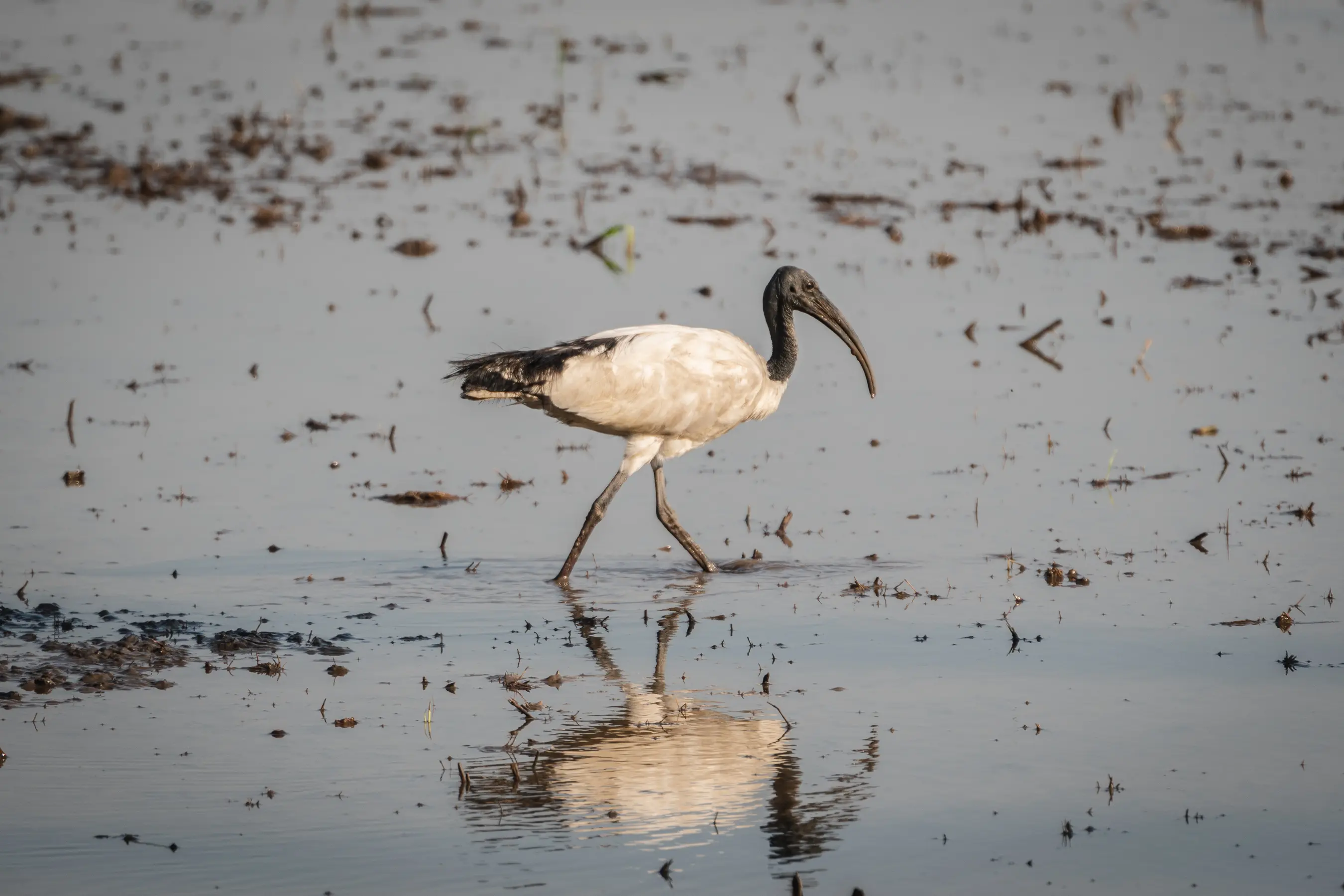
Also known as the Oriental white ibis, it is the only native ibis species that has an overall white plumage with a black neck and head. Found primarily around wetlands including agricultural fields and occasionally around coastal areas, this wading bird can also be seen foraging in dry fields and human-modified landscapes.
As a Near Threatened species on the IUCN Red List, the migrant ibis counts fewer than 20,000 mature individuals and is in moderately rapid decline owing to hunting, egg collecting, disturbance at breeding colonies, drainage, and agricultural conversion. If you see them at Prek Toal, you are one of the lucky ones, because they breed only in South and Southeast Asia, from India to the west and to the east in Japan.
Black-headed Ibis (Threskiornis melanocephalus)
Did you know that ibis fossils have been found to date back 60 million years? This means that the ibis has been around since the time of prehistoric animals.
Also known as the Oriental white ibis, it is the only native ibis species that has an overall white plumage with a black neck and head. Found primarily around wetlands including agricultural fields and occasionally around coastal areas, this wading bird can also be seen foraging in dry fields and human-modified landscapes.
As a Near Threatened species on the IUCN Red List, the migrant ibis counts fewer than 20,000 mature individuals and is in moderately rapid decline owing to hunting, egg collecting, disturbance at breeding colonies, drainage, and agricultural conversion. If you see them at Prek Toal, you are one of the lucky ones, because they breed only in South and Southeast Asia, from India to the west and to the east in Japan.
Painted Stork (Mycteria leucocephala)
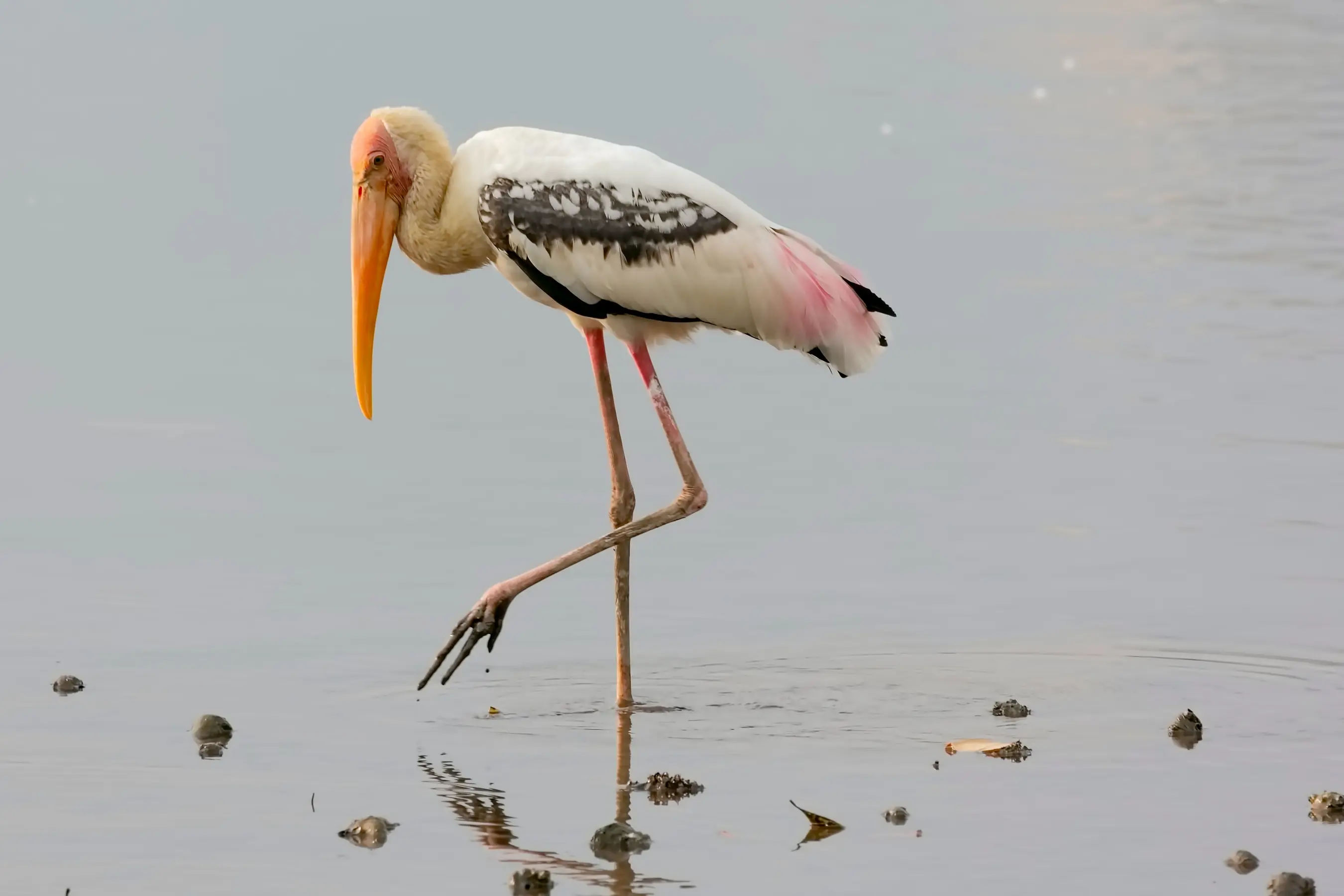
This beautifully colored stork can be found in the wetlands of the plains in tropical Asia, south of the Himalayas in the Indian Subcontinent, and extending into Southeast Asia. They are also called Painted Storks because of their distinctive pink tertial feathers which develop in adulthood, while they sport a heavy yellow beak with a down-curved tip resembling an ibis.
As one of the most abundant of the Asian storks, they have an estimated population of 16,000 to 24,000 mature individuals. However, this species is classified as Near Threatened because it is thought to be undergoing a moderately rapid population decline owing primarily to hunting, wetland drainage, and pollution.
Preferring freshwater wetlands in all seasons, they can also be found in irrigation canals and crop fields particularly flooded rice fields during the monsoon. As non-migratory birds, they are only able to make short distance moments in response to changes in weather, food availability, or breeding. Painted Storks are monogamous and form pairs, breeding on trees, so look up! You might spot them mid elegant flight during late mornings, where they use thermals in search of foraging areas.
Painted Stork (Mycteria leucocephala)
This beautifully colored stork can be found in the wetlands of the plains in tropical Asia, south of the Himalayas in the Indian Subcontinent, and extending into Southeast Asia. They are also called Painted Storks because of their distinctive pink tertial feathers which develop in adulthood, while they sport a heavy yellow beak with a down-curved tip resembling an ibis.
As one of the most abundant of the Asian storks, they have an estimated population of 16,000 to 24,000 mature individuals. However, this species is classified as Near Threatened because it is thought to be undergoing a moderately rapid population decline owing primarily to hunting, wetland drainage, and pollution.
Preferring freshwater wetlands in all seasons, they can also be found in irrigation canals and crop fields particularly flooded rice fields during the monsoon. As non-migratory birds, they are only able to make short distance moments in response to changes in weather, food availability, or breeding. Painted Storks are monogamous and form pairs, breeding on trees, so look up! You might spot them mid elegant flight during late mornings, where they use thermals in search of foraging areas.